
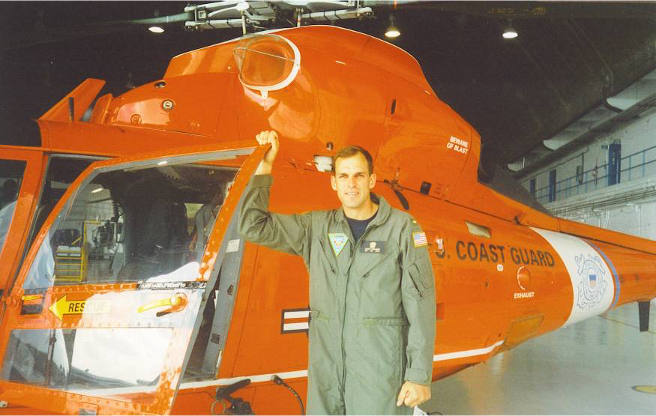
My connection to the military began long before I became a physician. My father and grandfather were career Army officers. I grew up at West Point and later on a military base in Stuttgart, Germany. Those experiences influenced my decision to serve in the United States Navy and ultimately to become a family physician.
I could not have known then that another thread would eventually connect my military background with much of my professional life: newborn male circumcision. Over nearly three decades, I have cared for newborns, taught clinicians, studied circumcision around the world, and led an international team of physicians and engineers in the development of AccuCirc and the Newborn Positioning System. That work ultimately led to SafeCirc® and to a broader effort to improve how newborn circumcision is taught and delivered.
Along the way, I came to appreciate that this work places me within a much older story. Military physicians and veterans repeatedly encountered circumcision not simply as a cultural or religious practice, but as a practical medical problem — and, in several cases, as an engineering problem worth solving.
Military medicine made foreskin-related disease a practical problem
Military medicine is shaped by practical constraints. Heat, moisture, limited bathing, friction, long deployments, infection, and delayed access to care can turn relatively minor conditions into operational problems. Historical literature describes wartime morbidity from foreskin-related conditions like balanitis, balanoposthitis, phimosis, and paraphimosis, and circumcision was often performed before deployment or during military service.¹˒²˒³
The influence of this experience extended well beyond the battlefield. Approximately 16 million Americans — roughly one in three American men — served during World War II,⁴ bringing an extraordinary proportion of the male population into contact with the military medical system, where circumcision and foreskin-related conditions were familiar medical issues. In the decades following the war, newborn circumcision became firmly embedded in American medical practice, with rates eventually approaching 80 percent.⁵ Historical reviews have identified the circumcision of servicemen before deployment in World Wars I and II as one factor that has contributed to the broader acceptance of circumcision in the United States.⁵
The Gomco clamp: an engineering response
One of the most enduring innovations in American newborn circumcision emerged during this era. The Gomco clamp entered the medical literature in the 1930s and became one of the principal devices used for newborn circumcision.⁶˒⁷
Dr. Hiram S. Yellen’s interest in circumcision was shaped in part by his experience as a U.S. Army physician during World War I, where he encountered foreskin-related conditions under difficult field conditions. After returning to civilian practice, he applied those observations to newborn care and described the clamp that became the basis of the modern Gomco. The device represented an engineering response to a surgical problem: protect the glans, compress tissue for hemostasis, and create a more reproducible cutting plane.
Cecil Ross: from World War I veteran to circumcision innovator
Cecil J. Ross provides an even more direct connection between military service and circumcision innovation. Ross served in the U.S. Army during World War I and suffered severe injuries in a propeller accident while serving with an aviation unit in France. He later entered medicine and developed the Ross Ring, which used a protective ring beneath the foreskin and a circumferential ligature to provide hemostasis while shielding the glans.⁸˒⁹ The concept anticipated the device later known as the PlastiBell.⁹˒¹⁰
I have a personal connection to this history. Members of the Ross family donated original Ross Rings to me. They are a physical reminder that medical devices do not appear fully formed: they evolve as physicians identify problems, imagine safer or more reproducible approaches, and build solutions.
From military observation to modern evidence
The military connection continued after the World Wars. A 1989 report from the 121st Evacuation Hospital described physical and cultural reasons active-duty American and Korean soldiers sought circumcision.¹¹ U.S. Army hospital studies also contributed to the early literature on urinary tract infection in circumcised and uncircumcised male infants.¹²˒¹³
In 1986, Aaron J. Fink published a brief letter in the New England Journal of Medicine proposing a relationship between the foreskin, circumcision status, and heterosexual HIV acquisition.¹⁴ That hypothesis preceded the large randomized trials in Africa by two decades.¹⁵˒¹⁶˒¹⁷ The later trials transformed the evidence base and helped establish voluntary medical male circumcision as an HIV-prevention intervention in appropriate high-prevalence settings.¹⁸
A familiar pattern: identify the failure mode, then redesign the system
This history resonates with my own experience. Engineering taught me to look for failure modes. Medicine taught me what those failures mean for patients. Military service reinforced the importance of systems, standardization, preparation, and accountability.
Those perspectives came together in the development of AccuCirc. Our international team approached circumcision as both a clinical procedure and an engineering system, asking whether known hazards could be addressed not only through better training, but through the design of the device itself. The same thinking later extended to the Newborn Positioning System, standardized procedural steps, training, follow-up, and the SafeCirc® model of care.
My military background is an important part of why I became so deeply involved in this field. Operational medicine taught me that good care must be not only safe and effective but practical and available where it is needed. That perspective has shaped nearly three decades of my work and our mission to make newborn circumcision safer, more precise, more reproducible, and more widely available.
Go Navy!
References
Li PS, Lü NQ, Masson P, Huang YF, Sun YH. Adult male circumcision for military men: history and future. Zhonghua Nan Ke Xue. 2010;16(6):483-489. PMID: 20608349.
Morris BJ, Krieger JN. Penile inflammatory skin disorders and the preventive role of circumcision. Int J Prev Med. 2017;8:32. doi:10.4103/ijpvm.IJPVM_377_16.
Patton JF, ed. Surgery in World War II: Urology. Washington, DC: Office of the Surgeon General and Center of Military History, United States Army; 1987.
The National WWII Museum. WWII veteran statistics. New Orleans, LA: The National WWII Museum. https://www.nationalww2museum.org/war/wwii-veteran-statistics. Accessed October 27, 2026.
Wallerstein E. Circumcision. The uniquely American medical enigma. Urol Clin North Am. 1985;12(1):123-132. PMID: 3883617.
Wan J. GOMCO circumcision clamp; an enduring and unexpected success. Urology. 2002;59(5):790-794. doi:10.1016/s0090-4295(01)01320-6. PMID: 11992930.
Peleg D, Steiner A. The Gomco circumcision: common problems and solutions. Am Fam Physician. 1998;58(4):891-898. PMID: 9767725.
Ross CJ. Circumcision Ring. U.S. Patent 2,272,072. Filed May 22, 1939; issued February 3, 1942.
Fong CW. The Ross circumcision ring. Hong Kong Med J. 2023;29(4):366.
Barrie H, Huntingford PJ, Gough MH. The Plastibell technique for circumcision. Br Med J. 1965;2:273-275. doi:10.1136/bmj.2.5456.273.
Pienkos EJ. Circumcision at the 121st Evacuation Hospital: report of a questionnaire with cross-cultural observations. Mil Med. 1989;154(4):169-171. PMID: 2499822.
Wiswell TE, Smith FR, Bass JW. Decreased incidence of urinary tract infections in circumcised male infants. Pediatrics. 1985;75(5):901-903.
American Academy of Pediatrics, Task Force on Circumcision. Report of the Task Force on Circumcision. AAP News. 1989;5(3):7-11.
Fink AJ. A possible explanation for heterosexual male infection with AIDS. N Engl J Med. 1986;315(18):1167. PMID: 3762636.
Auvert B, Taljaard D, Lagarde E, Sobngwi-Tambekou J, Sitta R, Puren A. Randomized, controlled intervention trial of male circumcision for reduction of HIV infection risk: the ANRS 1265 Trial. PLoS Med. 2005;2(11):e298. doi:10.1371/journal.pmed.0020298.
Bailey RC, Moses S, Parker CB, et al. Male circumcision for HIV prevention in young men in Kisumu, Kenya: a randomised controlled trial. Lancet. 2007;369(9562):643-656. doi:10.1016/S0140-6736(07)60312-2.
Gray RH, Kigozi G, Serwadda D, et al. Male circumcision for HIV prevention in men in Rakai, Uganda: a randomised trial. Lancet. 2007;369(9562):657-666. doi:10.1016/S0140-6736(07)60313-4.
World Health Organization, UNAIDS. New data on male circumcision and HIV prevention: policy and programme implications. Geneva: World Health Organization; 2007.